The Diablo series has captivated players for decades, prompting many to wonder: are the Diablo games connected? Absolutely. This iconic action RPG franchise, developed by Blizzard Entertainment, intricately weaves a dark fantasy narrative across its main titles, expansions, and even spin-offs. Players in the United States often seek to understand the grand lore, character continuity, and the evolving conflict between angels, demons, and humanity within the world of Sanctuary. This guide explores the deep connections, chronological progression, and shared universe elements that make the Diablo saga a cohesive and enduring epic. Understanding these links enhances the immersive experience, providing context to every battle against the Prime Evils. Delving into this rich history is crucial for both veteran demon slayers and newcomers alike.
Is Diablo a continuous story?
Yes, the Diablo series presents a continuous, interconnected story set within the dark fantasy world of Sanctuary. Each main game and its expansions build upon the lore and events of previous titles, advancing the epic conflict between angels, demons, and humanity in a coherent timeline.
Do Diablo games follow a specific timeline?
Absolutely, the Diablo games follow a distinct chronological timeline, detailing the progression of events and characters. Understanding this order—Diablo 1, Diablo 2, Diablo Immortal, Diablo 3, and Diablo 4—is key to grasping the full narrative arc and the evolving struggles within Sanctuary.
Are all Diablo games connected lore wise?
Yes, all mainline Diablo games, along with significant expansions and interquels like Diablo Immortal, are deeply connected by their lore. They share characters, major events, and an overarching conflict, ensuring a cohesive universe where every chapter contributes to the grand saga of Sanctuary.
Do I need to play previous Diablo games to understand Diablo 4?
While playing previous Diablo games isn't strictly mandatory for enjoying Diablo 4, having prior knowledge of the lore, characters, and major conflicts significantly enhances the experience. Diablo 4 builds on established history, and understanding it provides richer context for the new story.
What is the chronological order of the Diablo games storyline?
The chronological order of the Diablo storyline is generally: Diablo 1, followed by Diablo 2 and its Lord of Destruction expansion. Diablo Immortal is next, serving as an interquel between 2 and 3. Then comes Diablo 3 and its Reaper of Souls expansion, concluding with Diablo 4.
The eternal question for many gamers, especially those new to the dark world of Sanctuary, is this: are the Diablo games connected? Absolutely, they are. Each installment in the acclaimed Diablo series builds upon a rich, intricate narrative. This grand saga unfolds across multiple titles, telling a continuous story.
Blizzard Entertainment crafted a universe where every major game, expansion, and even some spin-offs contribute to a sprawling lore. Understanding these deep connections elevates the gameplay experience. You see the lasting impacts of past heroes and villains.
The Shared Universe of Sanctuary: Are the Diablo Games Connected?
The heart of the Diablo series is Sanctuary, a world secretly forged by renegade angels and demons. This hidden realm becomes the constant battleground for the Endless Conflict. Humanity often finds itself caught between these powerful celestial and infernal forces.
Key characters persistently reappear or influence events across various titles. Legendary figures like Deckard Cain serve as vital narrative threads. His wisdom guides players through critical moments. The enduring presence of the Prime Evils also highlights continuous lore.
The Diablo Storyline Progression: Are the Diablo Games Connected?
The narrative generally progresses chronologically, with each main game advancing the overarching plot. We witness the rise and fall of powerful entities. We also see the continuous struggle to protect Sanctuary from demonic invasion. The series ensures a coherent, evolving epic.
Many storylines resolve in one game only to set up future conflicts. This method keeps the universe feeling alive and dynamic. It constantly offers new challenges while honoring established history. The connections are fundamental to the series.
| Game Title | Connection Type | Key Narrative Link |
| Diablo 1 | Direct Prequel | The awakening of Diablo, the Lord of Terror. Establishes Tristram. |
| Diablo 2 | Direct Sequel | Continues directly from Diablo 1, tracking Diablo's journey. |
| Diablo 2 Lord of Destruction | Expansion Sequel | Concludes the story of the Prime Evils after Diablo 2. |
| Diablo 3 | Direct Sequel | Set 20 years after Diablo 2, focuses on the prophesied end times. |
| Diablo 3 Reaper of Souls | Expansion Sequel | Deals with Malthael and the aftermath of Diablo 3's events. |
| Diablo Immortal | Interquel | Set between Diablo 2 and Diablo 3, filling a lore gap. |
| Diablo 4 | Direct Sequel | Takes place decades after Diablo 3, introduces new threats like Lilith. |
What Others Are Asking? Are the Diablo Games Connected?
Are Diablo 1 and 2 Connected?
Yes, Diablo 1 and 2 are directly connected. Diablo 2 continues the narrative immediately after the first game, following the Dark Wanderer, who is the hero from Diablo 1 now corrupted by Diablo's soulstone. It expands upon the original story seamlessly, detailing the hunt for the Prime Evils.
Is Diablo Immortal Connected to the Story?
Diablo Immortal is indeed connected to the main Diablo storyline. It serves as an interquel, taking place chronologically between the events of Diablo 2 and Diablo 3. This mobile-first game fills in crucial lore gaps and features recurring characters, deepening the overall narrative.
What is the Timeline of Diablo Games?
The Diablo game timeline progresses generally as follows: Diablo 1, then Diablo 2 and its Lord of Destruction expansion. Diablo Immortal is next, followed by Diablo 3 and its Reaper of Souls expansion. Finally, Diablo 4 takes place decades after Diablo 3, continuing the saga in Sanctuary.
Is Diablo 4 a Direct Sequel?
Yes, Diablo 4 is a direct sequel to the previous mainline titles. It is set many decades after the events of Diablo 3: Reaper of Souls, presenting a new chapter in the ongoing conflict within Sanctuary. It introduces new threats while building on established lore and character histories.
Do I Need to Play Previous Diablo Games?
While you don't strictly need to play previous Diablo games to enjoy new ones, understanding the interconnected lore significantly enhances the experience. Each game provides summaries, but knowing the history of characters, conflicts, and the world of Sanctuary enriches your immersion into the epic saga.
FAQ: Are the Diablo Games Connected?
What connects the Diablo games?
The Diablo games are connected by a continuous overarching narrative, shared characters, and the consistent setting of Sanctuary. Each installment builds upon the lore and events of its predecessors, creating a cohesive dark fantasy epic for players.
Who are the main recurring characters in Diablo?
Key recurring characters in the Diablo series include Deckard Cain, a wise Horadrim scholar; Tyrael, the Archangel of Justice; and the various Prime Evils like Diablo, Mephisto, and Baal. Their presence threads through multiple titles, guiding or opposing the player.
Why are the Diablo games set in Sanctuary?
The Diablo games are set in Sanctuary because it is the world created by renegade angels and demons. This world became the perfect battleground for their eternal conflict, making it the central stage for all major events and the struggles of humanity against demonic forces.
How does the lore progress in Diablo?
The lore in Diablo progresses chronologically, with each game adding new chapters to the saga. Players witness the evolution of the Endless Conflict, the impact of significant events, and the development of key characters. This continuous progression deepens the narrative.
When did the Diablo saga begin?
The Diablo saga began in 1996 with the release of the original Diablo game. This initial installment introduced players to the town of Tristram and the Lord of Terror, establishing the foundation for the entire interconnected dark fantasy universe we know today.
Diablo games share a cohesive lore and interconnected storyline. The series takes place in Sanctuary, a world created by angels and demons. Key characters and villains often recur or have lasting impacts across titles. While each game presents a distinct chapter, they build upon previous events. Understanding the chronology enhances the overall narrative experience.
35
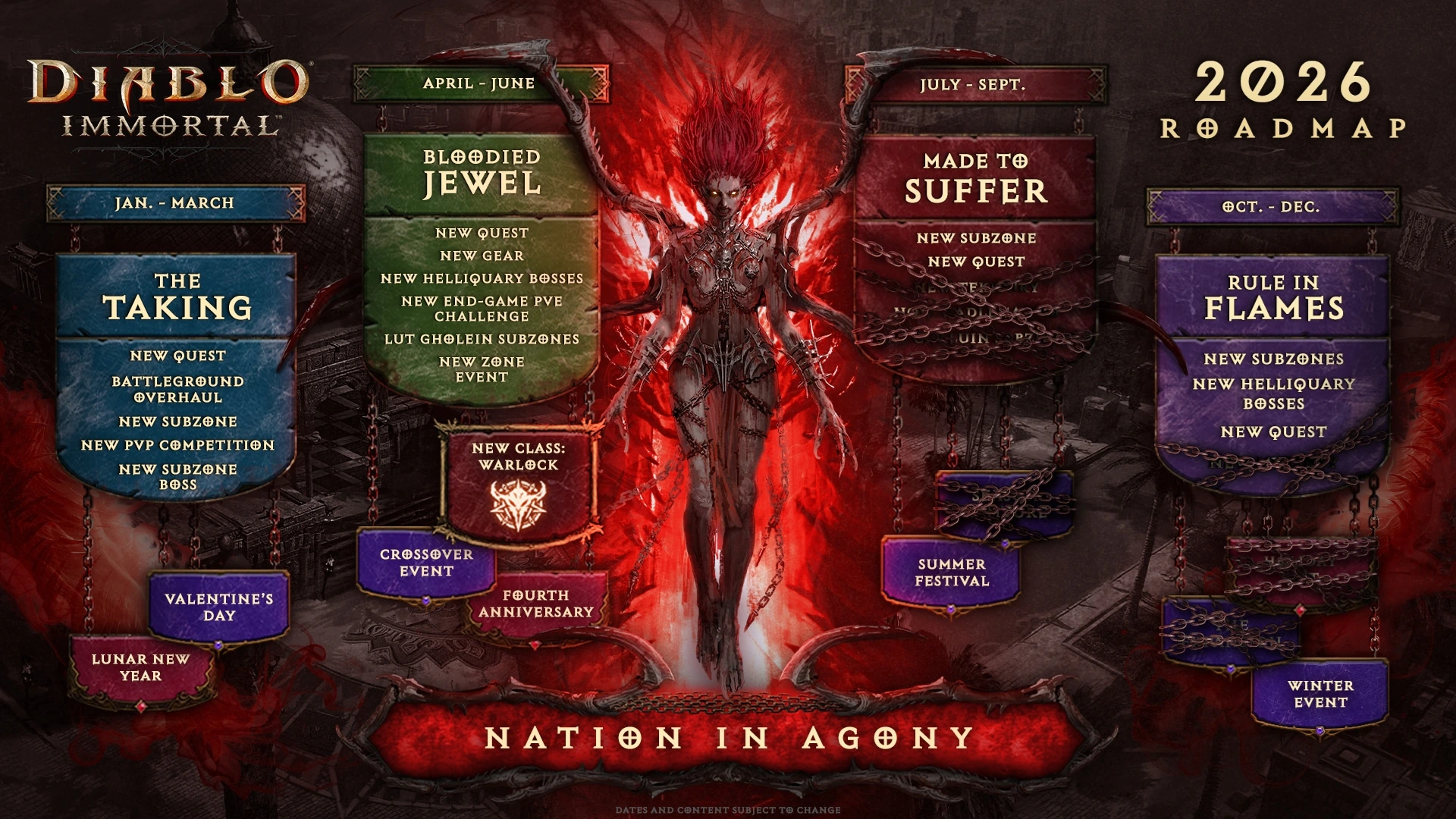

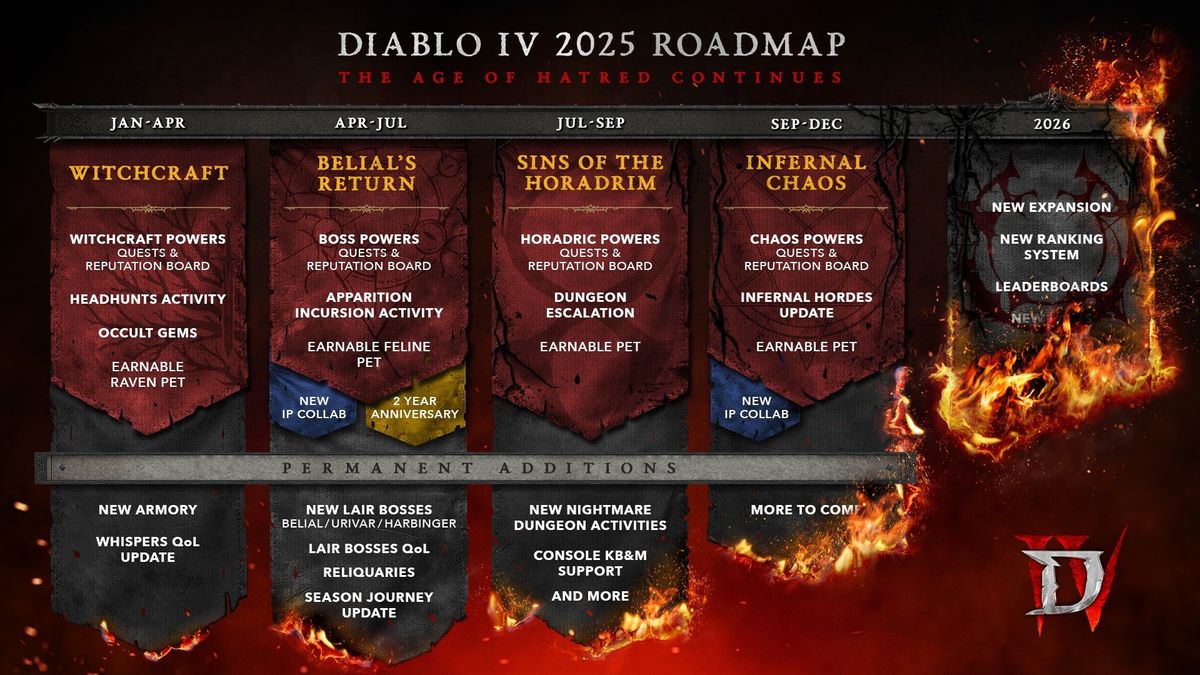

Is Diablo 4 Cloud Gaming Possible Now For Everyone 251215 Diablo 4 Roadmap 2026.webp. Diablo Immortal Reveals Warlock Class And 2026 Roadmap Icy Veins Diablo Immortal 2026. Diablo 30th Anniversary Reveals A New Warlock Class Across All Games 07c0a8dc Diablo Warlock Headliner Keyart 1920x1080 . Diablo 4 Roadmap Re Confirms Expansion In 2026 Hints At New Class 1200 80 . Diablo Series On PS5 List Of PlayStation Games Available In 2026 1232xr706 Q100

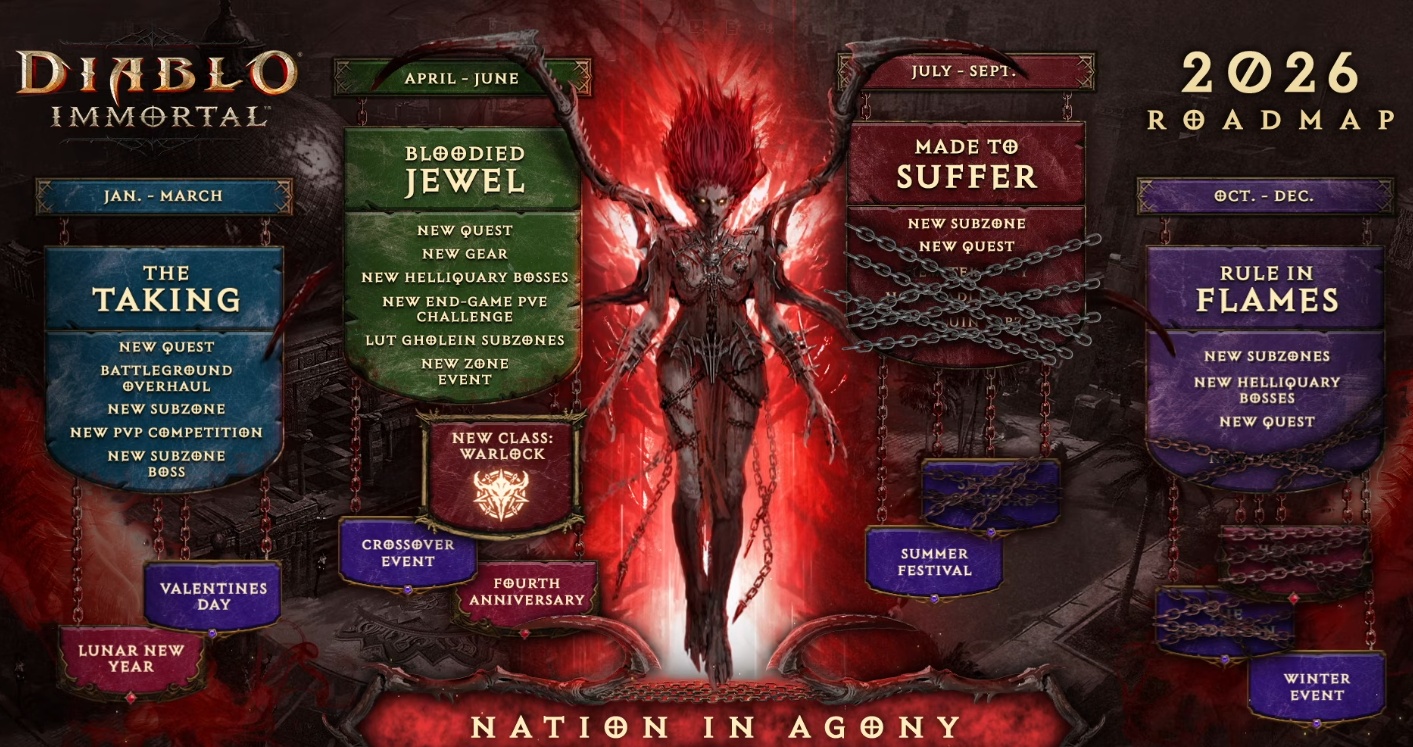

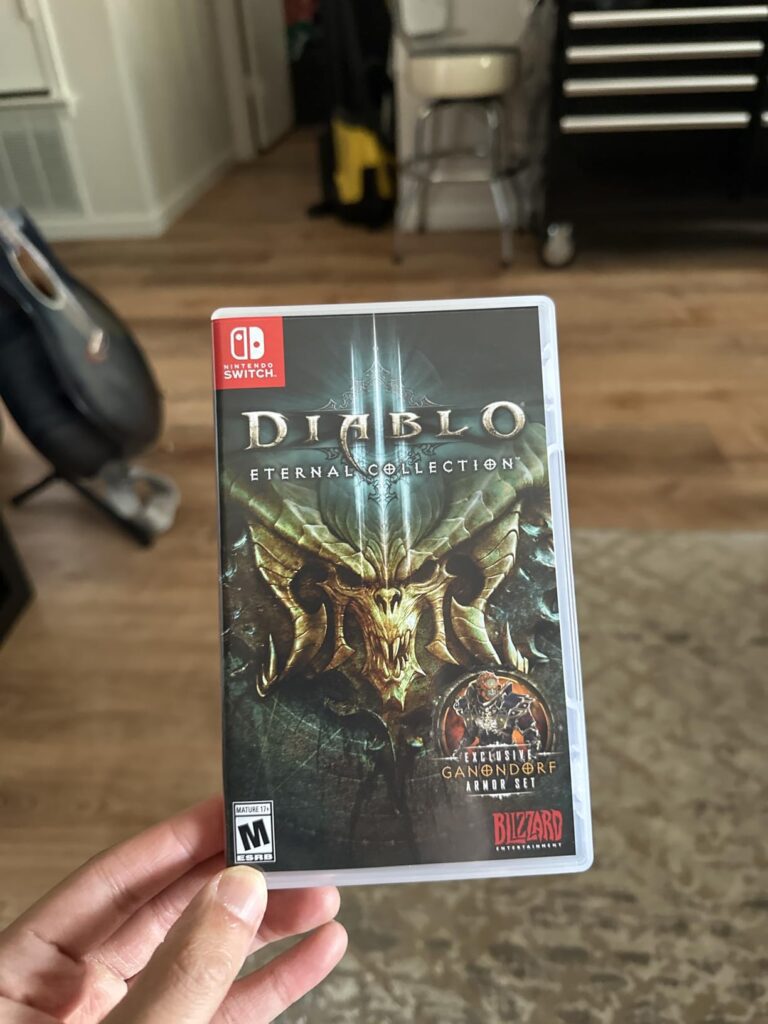
Diablo 4 S Second Expansion Won T Be Out Until 2026 PC Gamer . Beyond Nostalgia Diablo 30th Anniversary Spotlight Livestream Will. Diablo Celebra 30 A Os Con Un Shadow Drop Juega Con El Warlock Hoy . Diablo 4 Roadmap 2026 Explained New Classes Season 12 Start Date. 10 Best Games Like Diablo March 2026 Tested Ranked B07GKCMV6Y Customer 2 768x1024


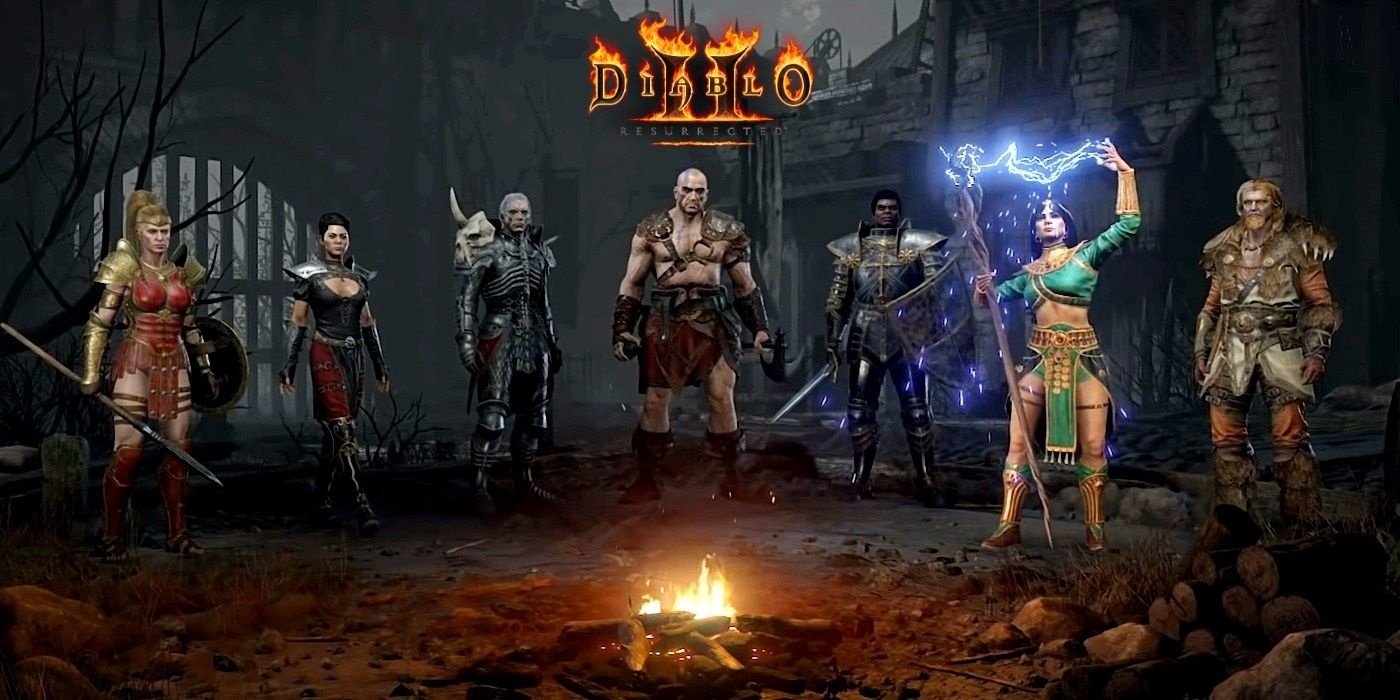
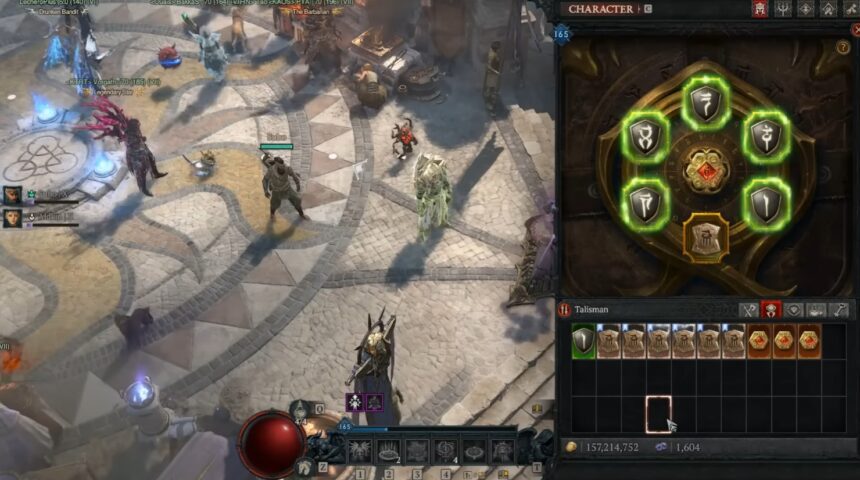
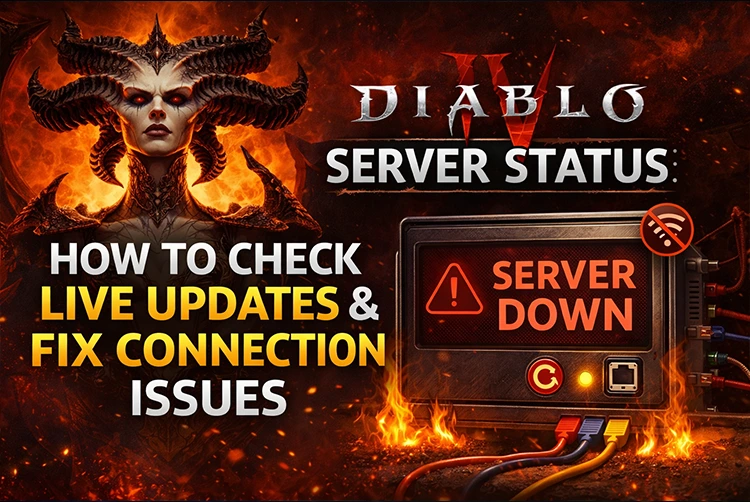
Diablo Spotlight 2026 Blizzard Zeigt Updates Zu Diablo 4 Co Diablo 30th Anniversary Spotlight 1200x426 . PlayStation Plus Monthly Games Lineup For July Includes Diablo IV Ps Plus Monthly Games July 2025 8c87318e 50dc 43af 94a5 . Blizzard And Bbno Present Save Me A Music Image 2026 03 Mar 9 2026 12 09 38 . Where To Farm Unique Gear And Charm In Diablo New Update Games Fuze Charms Diablo 4 860x480 . Diablo 4 Server Status How To Check Live Updates Fix Connection Issues Diablo 4 Server Status.webp
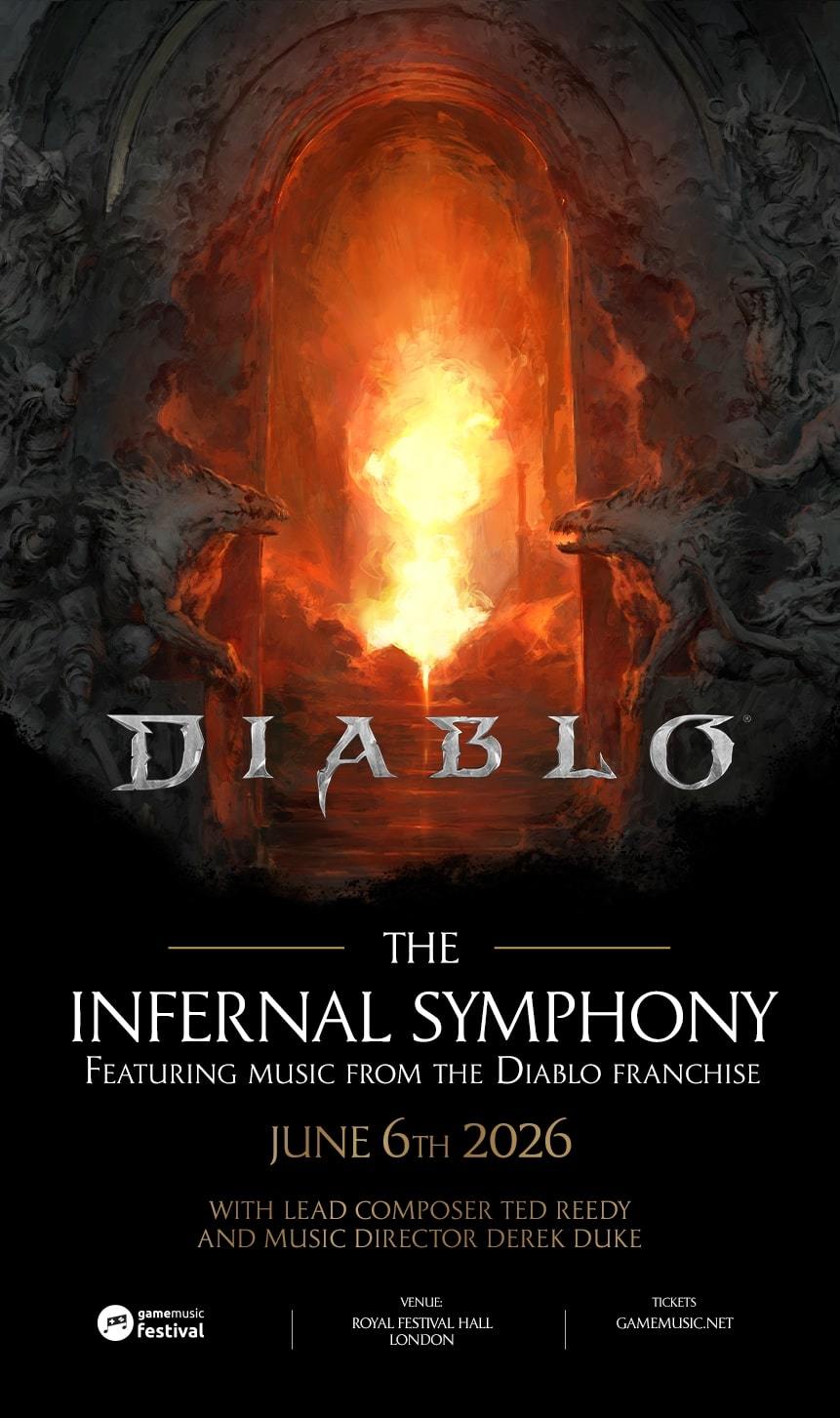


Diablo 4 Lord Of Hatred Every Grind Gate Explained Lord Of Hatred Review Hero . The 20 Most Anticipated Games Of 2026 Diablo 4 Press Image 2 . Diablo And Persona Are Also Getting Concerts In The UK In The Summer Of 4716353b . The Infernal Symphony Diablo 30th Anniversary Concert Game Music Diablo 1080x1080 2 . Diablo IV 2026 Diablo4 2026
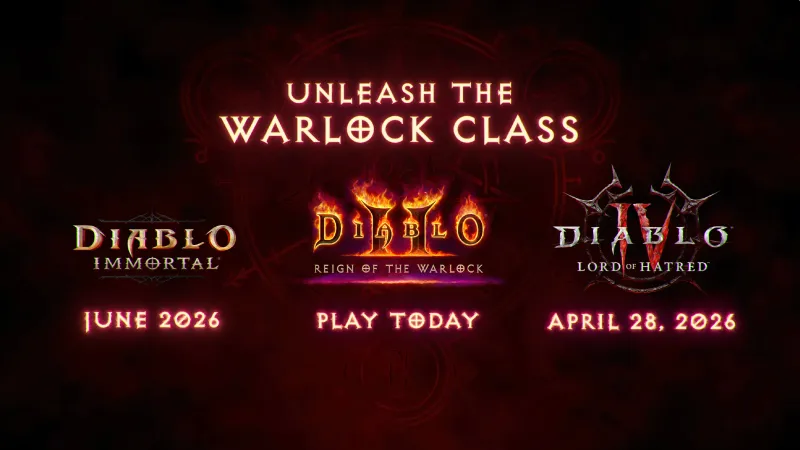



Blizzard Is Bringing The Warlock Class To Diablo IV Lord Of Hatred Diablo Warlock 3 .webp. Diablo 4 DLC 2026 Most Anticipated Features New Class New Endgame. Diablo 4 S 2025 Roadmap Explained Diablo 4 2025 Roadmap Explained . Diablo 4 2025 Roadmap Reveal Exclusive Interview YouTube . Sanctuary Is Expanding Faster Than Ever As Blizzard Overhauls Its Hqdefault



The Next Diablo 4 Expansion Is Lord Of Hatred An April 2026 Release . 6 Best Diablo Games The Definitive List In 2026 Best Diablo Games 768x430 . Humble Choice Bundle May 2026 Lineup Includes Diablo IV Humble Choice Bundle May 2026 . Evolution Of Diablo Games 1996 2020 R Diablo . The 10 Best Games Like Diablo 2026 Gaming Gorilla The Best Games Like Diablo 768x434
How To Fix Diablo 3 Can T Connect To Server Issues. Play Diablo 2 Resurrected On Mac In 2026 4 Methods That Worked Best . 10 Best Games Like Diablo March 2026 Tested Ranked B00KAEION6 Customer 1 576x1024 . Diablo 4 S Roadmap Reveals A New Expansion Coming In 2026 Esports Gg Og. Arizona 2026 Home Games Schedule Complete Guide New York Mets Spring Training 2026 Tickets Release Date Cost How To Buy 94 1 577x337