Understanding map errors is essential for anyone navigating the modern world. From small street name typos to significantly incorrect routes, map errors can cause frustration, delays, and even safety concerns for drivers, pedestrians, and logistics professionals across the United States. These inaccuracies stem from various sources, including outdated satellite imagery, rapid urban development, human data entry mistakes, and even GPS signal inconsistencies. While mapping technology has advanced dramatically, achieving perfect, real-time accuracy remains a continuous challenge. This article explores the common causes of these "map errors," how they impact daily life, and what you can do to report them and ensure smoother journeys. We will delve into why digital "map errors" persist, how they affect navigation in both bustling cities and remote areas, and the ongoing efforts by tech giants and local communities to minimize their occurrence. Stay informed to better navigate your world.
What are the most common map errors users encounter?
Users frequently encounter incorrect street names, outdated road information, and mislocated points of interest. One-way streets shown as two-way, or vice versa, are also common problems. These “map errors” often lead to frustrating detours and navigation challenges for drivers and pedestrians alike.
How often are digital maps updated to correct errors?
Digital maps are updated continually, not just on a fixed schedule. Major providers like Google and Apple integrate new data from satellite imagery, street-level surveys, and user reports daily. Significant changes or reported “map errors” can trigger more rapid, targeted updates to ensure accuracy for users.
Can I report map errors directly from my navigation app?
Yes, most popular navigation apps, including Google Maps and Apple Maps, offer direct features to report map errors. Users can easily suggest edits for incorrect addresses, missing roads, or outdated business information. This user feedback is crucial for improving overall map accuracy and reducing future “map errors.”
What is the impact of map errors on emergency services?
Map errors can have a severe impact on emergency services by causing delays in reaching critical locations. Incorrect routing or non-existent addresses can waste precious time during emergencies, potentially endangering lives. Accurate maps are vital for efficient and timely emergency response, making the correction of “map errors” a high priority.
Are map errors different from GPS signal issues?
Yes, map errors are distinct from GPS signal issues. Map errors refer to inaccuracies within the map data itself, such as a wrong street name. GPS signal issues relate to your device's ability to accurately determine its position, which can be affected by buildings or weather. Both can disrupt navigation, but the cause of "map errors" differs.
What steps are being taken to reduce future map errors?
Mapping companies are increasingly leveraging artificial intelligence, machine learning, and real-time data from various sources to reduce future map errors. Enhanced satellite imagery, automated change detection, and continuous integration of user-submitted corrections are key strategies being employed. Collaboration with local authorities also helps ensure up-to-date road network information.
Why do map errors still exist despite advanced technology?
Map errors persist despite advanced technology due to the dynamic nature of our world. Rapid construction, changing road layouts, and shifting business locations mean that maps require constant, real-time updates. Achieving perfect, instantaneous accuracy everywhere remains an immense logistical and technological challenge, making some "map errors" almost unavoidable.
Have you ever followed your GPS only to find yourself on a non-existent road or stuck in a dead end? You are not alone. Map errors, or "map errors" as they are commonly known, are a persistent challenge in our increasingly digital world, affecting navigation and daily life across the United States. These inaccuracies, which can range from minor discrepancies to major geographical blunders, arise from a complex interplay of factors including rapid urban development, satellite imagery limitations, and human data entry. Understanding the root causes of these "map errors" helps us appreciate the constant efforts to improve our digital navigation tools.
Mapping technology has come a long way. However, the dynamic nature of our environment means that "map errors" are an ongoing concern. New roads appear, old ones close, and businesses relocate, making real-time updates a monumental task for mapping providers like Google Maps and Apple Maps. For anyone relying on these tools, encountering "map errors" can lead to wasted time, increased fuel consumption, and significant frustration. This guide will explore why "map errors" occur and how you can contribute to their correction, ensuring more reliable navigation for everyone.
Understanding Map Errors
Map errors are essentially discrepancies between the digital representation of a location and its actual physical reality. These can include incorrect street names, outdated road layouts, missing points of interest, or even mislabeled geographical features. The accuracy of our digital maps directly impacts our ability to travel efficiently, locate services, and respond to emergencies. Addressing "map errors" is crucial for a smooth and effective transportation infrastructure.
Why Do Map Errors Happen?
Map errors stem from several sources. Data collection relies on satellite imagery, ground surveys, and user contributions, all subject to limitations. Urban expansion, construction, and road closures frequently outpace update cycles, leading to outdated information. Human data entry errors during map creation or modification also contribute to these inaccuracies. Furthermore, GPS signal interference can sometimes cause temporary "map errors" for users.
What Others Are Asking About Map Errors?
What causes common map errors?
Common map errors are caused by outdated satellite imagery, rapid infrastructural changes like new roads or buildings, human data entry mistakes during mapping, and occasional GPS signal inaccuracies. These factors make keeping maps perfectly current a significant challenge for all providers. Incorrect speed limits or one-way street directions are also frequent sources of frustration.
How can I report a map error?
Reporting a map error is usually straightforward through your preferred mapping application. Most platforms, such as Google Maps or Apple Maps, have a 'Report a problem' or 'Suggest an edit' feature. Users can mark incorrect locations, provide details about the error, and often submit photos to aid verification. Your contribution helps improve map accuracy for everyone.
Are GPS inaccuracies considered map errors?
GPS inaccuracies can sometimes feel like map errors, but they are technically distinct. Map errors are flaws in the underlying map data itself, like a mislabeled road. GPS inaccuracies, however, are issues with your device's ability to precisely pinpoint your location on the map, often due to signal interference or device limitations. Both can cause navigation problems.
How often are maps updated to fix errors?
Map update frequencies vary significantly among providers. Major mapping services continually update their data, often incorporating satellite imagery, street-level data, and user-submitted corrections on a rolling basis. Some critical areas might see updates more frequently, even daily or weekly, especially in response to significant changes or reported errors, aiming to minimize persistent "map errors."
What impact do map errors have on daily life?
Map errors significantly impact daily life by causing navigation confusion, leading to missed appointments, increased travel times, and wasted fuel. They can create safety hazards by directing drivers down unsafe or non-existent routes. Businesses may also suffer if their listed location is incorrect, preventing customers from finding them easily due to these "map errors."
FAQ About Map Errors
What are map errors?
Map errors are inaccuracies or discrepancies within digital or physical maps. They represent a mismatch between what the map shows and the actual geographic reality on the ground. These issues can range from minor misspellings to major positional inaccuracies, impacting navigation for users.
Who is responsible for fixing map errors?
Mapping companies like Google, Apple, and various governmental agencies are primarily responsible. They employ dedicated teams for data collection and verification. Additionally, user communities play a crucial role by reporting errors and suggesting edits, creating a collaborative effort to maintain accuracy and address "map errors."
Why are map errors important to address?
Addressing map errors is vital for efficient navigation, public safety, and reliable service delivery. Inaccurate maps can lead to confusion, delays, emergency service misdirection, and lost business opportunities. Correct maps ensure smooth travel and access to crucial information, reducing the impact of "map errors" on daily life.
How can users contribute to reducing map errors?
Users can actively contribute by utilizing the reporting features within their mapping applications. By submitting accurate feedback, correcting incorrect information, and providing details like photos, individuals help identify and rectify "map errors." This crowd-sourced data is invaluable for keeping maps current and precise.
When do map errors typically occur?
Map errors can occur anytime, often during rapid urban development, construction of new infrastructure, or when businesses change locations. They also arise from human data input mistakes, outdated source information, or slow update cycles. The dynamic nature of our world makes some "map errors" almost inevitable at various points.
Key Steps to Minimize Map Errors
Understanding and reporting "map errors" is crucial. Here are some actionable tips:
- Always cross-reference with local knowledge if possible.
- Report any "map errors" you encounter directly through your navigation app.
- Verify critical locations, like emergency services, using multiple sources.
- Be aware of your surroundings, especially in new or rapidly developing areas.
Map Error Types and Impact
| Error Type | Description | Typical Impact |
| Incorrect Street Name | Road labeled with the wrong name. | Confusing directions, missed turns. |
| Missing Road Segment | A physical road does not appear on the map. | Unnecessary detours, dead ends. |
| Outdated Point of Interest | Business or landmark shown at an old or incorrect location. | Wasted travel time, frustration finding destinations. |
| Incorrect One-Way Street | Road marked as two-way when it is one-way. | Traffic violations, safety hazards. |
| Wrong Speed Limit | Map displays an incorrect legal speed limit. | Potential tickets, unsafe driving. |
| Geographical Misalignment | Features like rivers or boundaries are slightly off. | Minor navigation issues, aesthetic flaws. |
The Future of Mapping and Map Errors
The future of mapping promises even greater accuracy and real-time updates. Advances in AI, machine learning, and satellite technology are continually improving data collection and processing. Crowdsourcing and user participation will remain vital, empowering individuals to be part of the solution to reduce "map errors." The goal is a seamless, error-free navigation experience, adapting as quickly as the world changes around us. These innovations will significantly reduce the occurrence and persistence of future "map errors."
Common causes of map errors, impact on daily navigation, reporting inaccuracies, future of mapping, GPS challenges, real-time data needs, urban sprawl, satellite updates, user contribution.
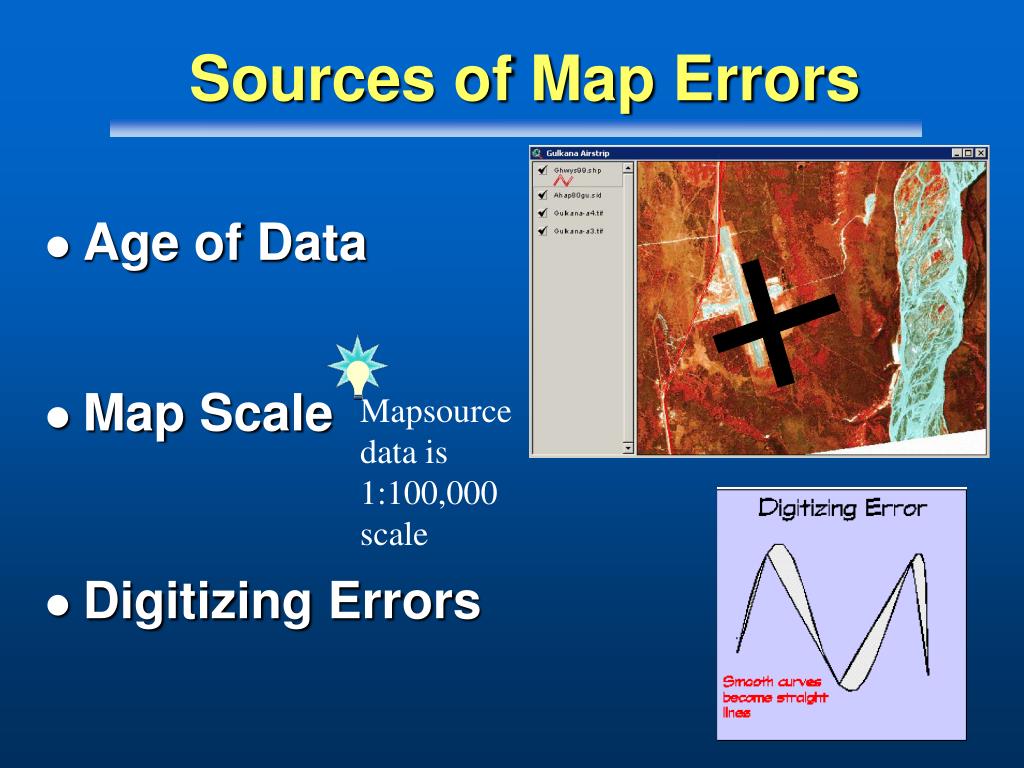 PPT Tools Of The Trade PowerPoint Free Download ID Sources Of Map Errors L
  Overlay Grid Lines On A Map Atlas Best Free Mapping Tools In
  Old Farmer S Almanac Almanac Com OFA US Summer Weather Map
  The Death Clock App Uses AI To Predict When You Re Likely To Die Google Maps Logos With Red Crosses Through
  Where The House Map Stands For Democrats CBS News Cbsn Fusion Where The House Map Stands For Democrats Thumbnail
  Your Winter Olympics Maps Are Here Mapcreator Olympic Locations Map With Legend x
  FIFA Apologizes To Ukraine Soccer Body For Crimea Map Error At Switzerland FIFA World Cup Draw
  New Mercedes Benz GLC GLC D Sport Utility In Foothill Ranch Images
 My Maps Best Mapping Apps Field Data Collection